Prof. M. S. Reddy
Professor, Department of Entomology & Plant Pathology, Auburn University, Auburn, Alabama, USA

Pomegranate (Punica granatum) is an ancient fruit crop renowned for its
nutritional, medicinal, and economic importance and is globally recognized as a
“Superfruit.” In India, pomegranate is cultivated on approximately
2.24 lakh hectares. However, its rapid expansion has led to several critical challenges, including
flower and fruit drop, as well as major pests and diseases such as
shot hole borer, thrips, bacterial blight, wilt complex, fruit rot, and cercospora fruit spot (Tikri).
To address these emerging issues in pomegranate cultivation and crop protection, the
National Research Centre on Pomegranate (NRCP), Solapur and the
Society for Advancement of Research on Pomegranate (SARP), Solapur are jointly organizing the
International Conference on Pomegranate 2026 during
06–08 September 2026 at Yashada, Pune, Maharashtra
(Hybrid Mode), in collaboration with
Mahatma Phule Krishi Vidyapeeth (MPKV), Rahuri.
The conference theme, "Climate Resilient Pomegranate Ecosystem for Amritkaal: Fostering Sustainability,
Innovation & Global Health," aims to bring together
scientists, farmers, industry leaders, and policymakers to discuss
innovations in pomegranate research, identify key research priorities, and develop
climate-resilient crop production and protection strategies. The event focuses on promoting
sustainable agriculture, farmer prosperity, and inclusive growth, contributing to
India’s vision of becoming a developed nation by 2047.
Renowned academicians, researchers, and industry experts from across the country will be sharing their knowledge and insights at this conference.
Professor, Department of Entomology & Plant Pathology, Auburn University, Auburn, Alabama, USA
Professor, Department of Biology, West Virginia State University , USA
Associate Professor & Extension Specialist, Horticultural Sciences Department, University of Florida, Institute of Food & Agricultural Sciences (UF/IFAS), USA
Horticulturist and Plant Breeder, Italy
Director, Agricultural Experiment Station of Elche, Alicante, Spain
Stellenbosch University, South Africa
Stellenbosch University, South Africa
Assistant Director of Agriculture Research, Fruit Research and Development Institute, Department of Agriculture, Sri Lanka
Assistant Professor, Plant Protection Biological Control Laboratory (PPBC), Program Coordinator - Organic Agriculture, Institute of Applied Science, Madan Bhandari University of Science and Technology, Nepal
Associate Professor of Postharvest Technology, Department of Soils, Water & Agricultural Engineering, College of Agricultural & Marine Sciences, Sultan Qaboos University, Oman









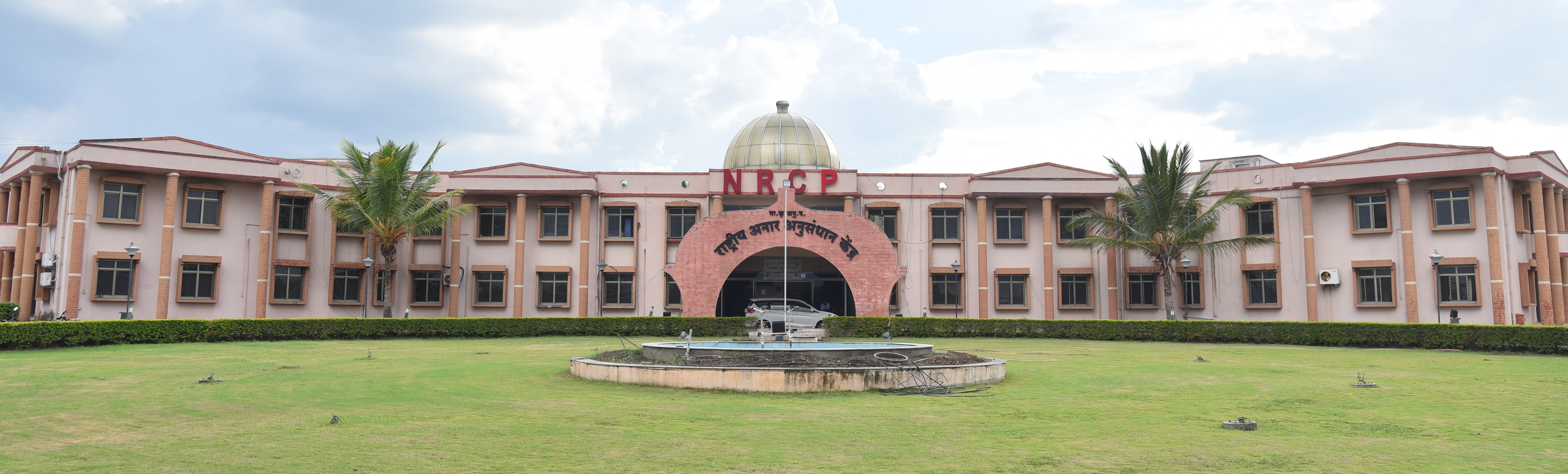
The ICAR–National Research Centre on Pomegranate (ICAR–NRCP) is a premier research institute located in Solapur, Maharashtra, established in 2005 under the Indian Council of Agricultural Research (ICAR). It is the only dedicated centre in India focused exclusively on pomegranate research and development.
The institute works towards improving pomegranate cultivation through advanced research in crop improvement, pest and disease management, water management, and post-harvest technology. It has developed high-yielding and climate-resilient varieties, along with scientific farming practices that help farmers enhance productivity and fruit quality.
ICAR–NRCP also provides training, technical guidance, and extension services to farmers, playing a crucial role in boosting pomegranate production and supporting India’s position as one of the leading producers of pomegranate in the world.
The Society for Advancement of Research on Pomegranate (SARP), Solapur is a non-profit organization based in Solapur, Maharashtra, dedicated to promoting research, development, and sustainable cultivation of pomegranate. Established with the objective of supporting both farmers and researchers, the society plays a vital role in advancing the pomegranate sector.
SARP works closely with scientists, agricultural institutions, and growers to enhance productivity, fruit quality, and disease management practices. The society focuses on strengthening collaboration and promoting the adoption of improved cultivation techniques.
Through training programs, workshops, and field demonstrations, SARP actively spreads awareness about modern pomegranate cultivation practices and innovations, helping farmers adopt scientifically proven methods for better outcomes.
By serving as a bridge between research and field-level application, SARP plays an important role in strengthening the pomegranate industry in Solapur and surrounding regions, which are widely recognized for their significant contribution to India’s pomegranate production.
Become a part of the growing community of pomegranate professionals and contribute to advancing pomegranate research. Join the Society for Advancement of Research on Pomegranate (SARP), Solapur and connect with researchers, scientists, and experts across India and the world.
SARP Membership Form
The Mahatma Phule Krishi Vidyapeeth (MPKV), Rahuri is the first state agricultural university established in 1968 at Rahuri, Maharashtra. The university serves the farming community across several districts of Western Maharashtra and plays a vital role in agricultural development in the region.
MPKV focuses on three core areas: education, research, and extension, offering undergraduate, postgraduate, and doctoral programs in agriculture and allied sciences. The university is committed to developing skilled professionals and advancing agricultural knowledge.
With a vast rural campus and multiple research stations, MPKV has contributed significantly to the development of improved crop varieties and innovative farming technologies that support sustainable agricultural growth.
Through its strong emphasis on training, research, and technology dissemination, MPKV plays an important role in promoting modern agricultural practices, enhancing productivity and sustainability, and supporting the farming community in the region.
| Registration Begins | 15 April, 2026 |
| Last date for Abstract Submission | 20 August, 2026 |
| Last Date of Early Bird Registration | 20 August, 2026 |
| Conference Regular Registration | until 06 September 2026 |
| Participant Category | Early Bird Registration | Regular Registration | ||
| Physial Mode | Virtual Mode | Physial Mode | Virtual Mode | |
| Foreign Delegates | ||||
| International Delegates | $ 200 | $ 100 | $ 250 | $ 125 |
| International Students (Foreigners) | $ 100 | $ 50 | $ 125 | $ 75 |
| Indian Delegates | ||||
| Indian Delegates SARP Life Member | ₹ 5,000/- | ₹ NA | ₹ 6,000/- | ₹ NA |
| Indian Delegate Non-SARP Members | ₹ 6,000/- | ₹ NA | ₹ 7,500/- | ₹ NA |
| Indian Students | ₹ 2,500/- | ₹ NA | ₹ 3,000/- | ₹ NA |
| Farmer Delegate | ₹ 3,000/- | |||
Virtual Mode is applicable only for International Delegates. * NO Registration Kit
Dr. Mangi Lal Jat
Secretary, DARE & Director General,
ICAR, New Delhi
Dr. Sanjay Kumar Singh
Deputy Director General (Horticultural Sciences)
ICAR, New Delhi
Dr. Vilas K. Kharche
Vice Chancellor
MPKV, Rahuri
Dr. Rajiv Arvind Marathe
Director
ICAR-NRC on Pomegranate, Solapur
Dr. Prashant S. Bodake
Director of Research
MPKV, Rahuri
Dr. K. Dhinesh Babu
Principal Scientist
NRC on Pomegranate, Solapur
Dr. Sangram Sahebrao Dhumal
Associate Dean & Professor of Horticulture
YCGCA, Karad
Dr. Ranjan Kumar Singh
Principal Scientist
NRC on Pomegranate, Solapur
Dr. Prakash G. Patil
Principal Scientist
NRC on Pomegranate, Solapur
Dr. N. V. Singh
Principal Scientist
IARI, New Delhi
Dr. Subhash Bhalekar
Associate Dean
College of Agriculture, Pune
Dr. Nilesh Gaikwad
Senior Scientist,
NRC on Pomegranate, Solapur
Dr. Manjunatha N
Senior Scientist,
NRC on Pomegranate, Solapur
Dr. Somnath Pokhare
Senior Scientist,
NRC on Pomegranate, Solapur
Dr. Pinky Raigond
Senior Scientist
NRC on Pomegranate, Solapur
Dr. Shilpa P.
Senior Scientist
NRC on Pomegranate, Solapur
Dr. Chandrakant Awachare
Senior Scientist
NRC on Pomegranate, Solapur
Dr. Basana Gowda G.
Senior Scientist
NRC on Pomegranate, Solapur
Dr. Ramniwas
Senior Scientist
NRC on Pomegranate, Solapur
Dr. Mallikarjun M.H.
Senior Scientist
NRC on Pomegranate, Solapur
Dr. Namrata A. Giri
Scientist
NRC on Pomegranate, Solapur
Dr. Roopa Sowjanya P
Scientist
NRC on Pomegranate, Solapur
Mr. Rahul Damale
Scientist
NRC on Pomegranate, Solapur
Dr. S. G. Bhalekar
Professor (Hort.), College of Agriculture, Pune
Dr. A. B. Gosavi
Associate Professor, College of Agriculture, Pune
Dr. P. U. Raundal
Associate Professor, College of Agriculture, Pune
Dr. C. S. Chaudhari
Associate Professor, College of Agriculture, Pune
Dr. Y. C. Sale
Professor (Agri. Economics), College of Agriculture, Pune
Mob: 8308428983
Dr. D. B. Lad
Professor, College of Agriculture, Pune
Pritam Y. Shinde
Assistant Professor,
College of Agriculture, Shivajinagar, Pune
Dr. Manjunatha N.
Mob: 9108206800
Dr. Somnath Pokhare
Mob: 9922100401
Dr. Nilesh Gaikwad
Mob: 7972881002
Hotels near the conference venue
📌 For Conference Participants:
• Direct booking only • Pick-up/drop available from these hotels
Pune in September experiences a pleasant transition from the monsoon to early autumn, making it one of the most enjoyable times to visit the city. The weather remains cool and refreshing, with temperatures typically ranging between 20°C and 28°C, while occasional light showers enhance the lush greenery left behind by the rains. The surrounding hills and forts appear vibrant and scenic, attracting nature lovers and trekkers, while the air feels cleaner and more comfortable. Popular spots such as Saras Baug and Pashan Lake look especially beautiful during this time. September also brings a festive charm with the celebration of Ganesh Chaturthi, one of Pune’s most important cultural events, filling the city with energy, decorations, and traditional processions. Overall, it is an ideal time to experience Pune’s natural beauty and rich cultural heritage.